















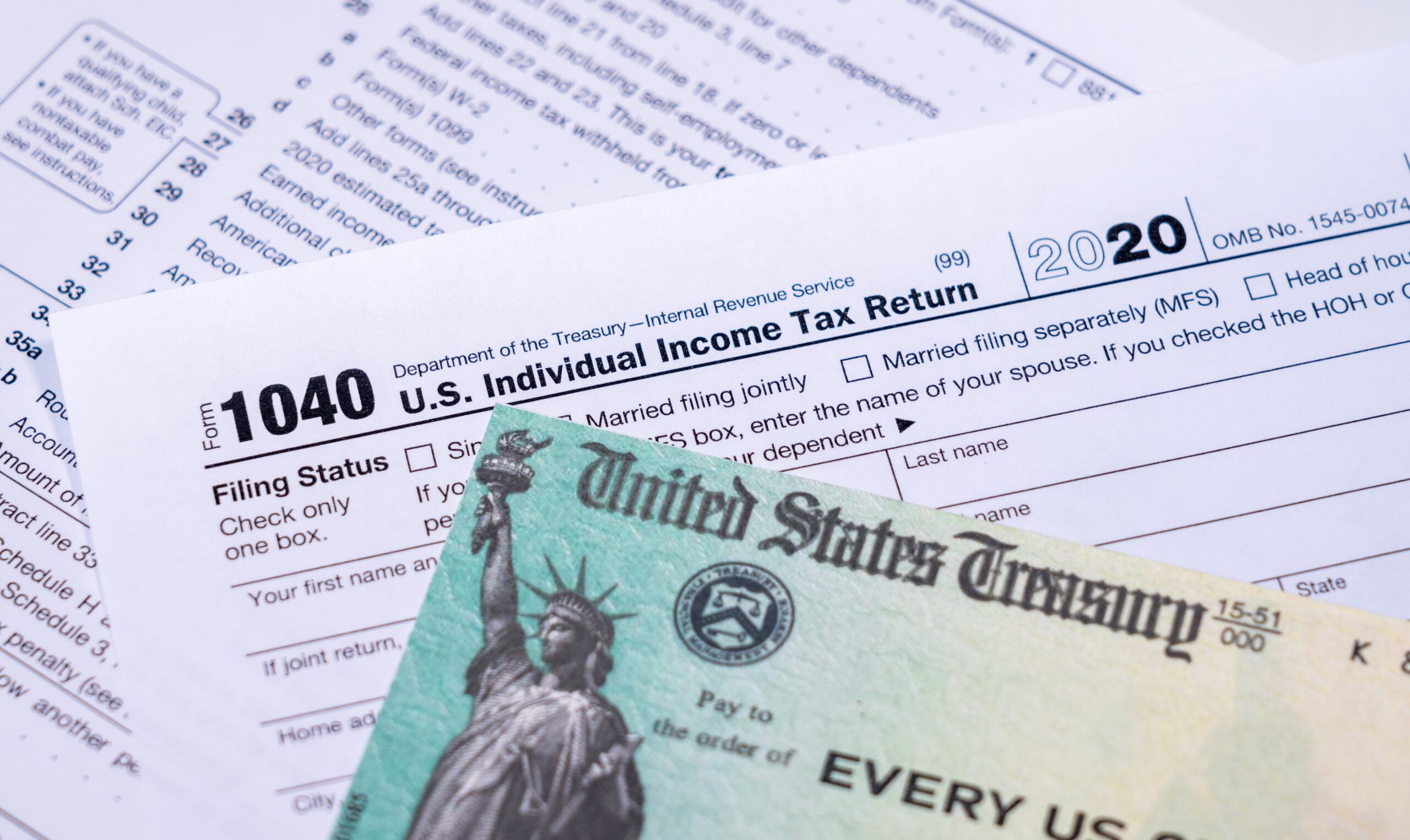
To maximize the amount of your third stimulus check, qualify for additional credit for the second stimulus (or qualify if you did not previously receive any stimulus), and possibly increase your tax refund, you may want to file your taxes early! Read more to find out why!
The second round stimulus had to be processed in such a short timeframe that the IRS relied on 2019 tax return information for many in order to help determine eligibility and have the checks processed by the end of December 2020 and to forward the checks no later than January 15, 2021.
However, for many of us, 2020 income was considerably lower than 2019, due to the financial challenges experienced as a result of COVID-19. So, if you did not qualify based on your 2019 income, or did not file a 2019 tax return, it is still possible to qualify for the second stimulus – in the form of a Recovery Rebate Credit – by submitting your 2020 tax return so that your 2020 income may be used to determine your eligibility instead of 2019 income.
If your 2020 income is low enough to meet the maximum income allowed for your filing status to qualify (maximum AGI $75,000 single, $150,000 married, and $112,500 Head-of-Household), you may claim the Recovery Rebate Credit (which is the tax credit from which the stimulus check derived) to receive the second stimulus; or receive an additional amount if your 2020 income entitles you to a larger stimulus amount than your 2019 income granted.
The Recovery Rebate Credit must be claimed on the 2020 tax return of qualifying individuals, and reduces taxes owed or may increase the tax refund. You may qualify for the Recovery Rebate Credit and may want to consider filing early if one or more of the following situations are true:
- Your 2020 income is lower than your 2019 income
- You got married
- You had a child
- You lost or changed your job
- You are a sole proprietor who suffered business losses
If you’ve experienced one or more of the above situations, filing early may be your opportunity to give the IRS more favorable information to go on to maximize your second and third stimulus before the Recovery Rebate Credit is done, and before third stimulus calculations begin.
On the other hand, of course, if you expect your 2020 income to be higher, you may consider delaying your filing so that your third stimulus is based on your 2019 income. Also – VERY IMPORTANT – if you received unemployment compensation and did not elect to pay taxes (you may end up with a larger than usual tax liability), your 2019 tax return has not yet been processed, or you have federal obligations that may cause your refund to be offset, then early filing may not be for you. Some reasons for an offset include:
- Unemployment compensation overpayments
- Child support payments that are past-due
- Other federal debt (but student loan repayment is currently paused through September 30, 2021)
So, please be sure to talk with your tax advisor for guidance related to your personal financial situation, and for more information on stimulus eligibility and filing.
I hope this information helps ❤️.
Shelly
Disclaimer: This information is provided for general information purposes only and does not constitute nor is to be construed as tax nor financial advice. Please consult with an accountant or financial advisor for advice suitable for your personal situation.